
You prepare every client meeting in two minutes. You do not spend half an hour scrolling through websites, just one single prompt that always gives you the same briefing: what this company does, which market it operates in, what it is struggling with and which three questions you open the conversation with. As a result you walk in with a much stronger first impression and a sharper conversation, without it taking any extra time.
Every week Tom chooses between scrolling and improvising
Tom is a salesperson. I often use him in my keynotes because everyone in the room recognises themselves in him. At a quarter to nine he has a first meeting at a regional construction company, and he has two options: scroll through websites and LinkedIn for half an hour, or walk in unprepared and hope the conversation goes well by itself. Usually he chooses the second option. His diary is often full, and preparation is the first thing to go. He walks in with a vague picture of the company and with general questions he asks everyone. The meeting is polite and lasts an hour, but afterwards he often thinks: that could have gone better.
Two minutes of preparation change your first impression
With the right prompt, preparation time can be cut from 30 minutes to just 2 minutes. That is the gain you get from Tom's flow: note the name and company, send the prompt, read the briefing. That is all he does. The AI searches, analyses and structures the information, while Tom reads it and makes decisions. The difference is not only in those twenty-eight minutes saved. It is mainly about what you do with that time. A sharp question in the first three minutes of a conversation shows the client that you did your homework before you arrived. Trust does not start at the table, but two minutes earlier.
Working with AI is like learning to drive
I like to compare this with learning to drive. On your first drive you think about everything at once: the mirrors, the clutch, the indicator and that cyclist on the right. You are so focused on the car that you hardly notice the road. After ten drives you do it without thinking and simply keep talking as you go. The client meeting prompt works the same way. The first time it feels a bit awkward, you are unsure what exactly to type and you read the briefing with some suspicion. The second time it already goes much more smoothly. By the time you have your fifth meeting, it comes naturally and you open your AI tool without giving it a second thought.
That is why it does not work to try it just once and then decide it is not for you. You really have to try it out. Five meetings is only one week in most diaries. By building up this experience, you give yourself the chance to get used to the technology and discover its benefits.
The car does not drive for you
“AI gives you a briefing, not a conversation. The conversation stays yours.”
Learning to drive also means realising that the car does not do everything for you. AI gives you a briefing, but it does not hold the conversation for you. Tom read on his client's website that they are committed to building trust. He decided to ask what that means in concrete terms in their relationship with their own customers. No tool found that specific detail, and it was exactly that question that turned an intake meeting into a real conversation. This is precisely the division I promote everywhere. AI does not replace people, it replaces specific tasks. The scrolling disappears, but you stay at the table. Your observation, your follow-up question and your judgement of what this client really needs: that is the part nobody takes over from you.
Prepare your next client meeting in four steps
Just start with one appointment in your diary this week. Follow these four simple steps. Choose one meeting, preferably a first introduction, because that is where the difference between prepared and unprepared is biggest.
Open an AI tool that can search the internet and paste this simple prompt: “I have a first meeting later with [name] from [company]. Give me a short briefing on the company: what does it do, which market is it active in, which challenges might it be facing, and which three questions can I ask to open the conversation on substance?”
Read the briefing, not the website. Check the one fact you really want to use, because AI often sounds certain, even when it is wrong. Then add one observation of your own: something you noticed and the AI did not, such as a sentence on their website, a post from last week, or something a colleague told you. Do this for every first meeting for a week. After that you no longer have to think about it, just as you no longer think about working the clutch.
Last week I used the prompt just five minutes before a meeting that I had actually started preparing for too late. The briefing was there within two minutes, and the best question of that whole conversation was one I had come up with myself in the car on the way. That is still the finest division of work I know.
Download here the client meeting prompt that AI Nation made for your next meeting with a new client, and send me your result.
Frequently asked questions
- Which AI tool do I need for this? Any tool that can search the internet, such as ChatGPT, Claude or Copilot. Preferably use the tool your company has already chosen and stick with it.
- Can I paste client data into an AI tool? For this prompt you only need public information: a name, a company, a website. Quotes, contracts and personal data belong only in the business version your company has approved.
- Is everything the AI tells me correct? Not always. That is why it is important to check the one fact you really want to use in the conversation. A figure or a name you mention is worth checking yourself.
- Does this also work for an internal meeting? Yes. Replace the client with the topic and ask for a briefing plus three questions that make the discussion sharper. The same recipe, but for a different purpose.
- Does this replace my own preparation? No. It replaces the scrolling. The thinking and the observation remain your responsibility.
What to remember from this Letter to the AI Nation
- AI gives you a briefing, not a conversation. The conversation stays yours.
- Not AI in your place, but AI for the scrolling.
- Working with AI is like learning to drive: your first drive feels awkward, but after ten drives you do it without thinking.
- No tool finds the detail you notice yourself. That turns an intake into a real conversation.
- Trust does not start at the table, but two minutes before.
Every two weeks I write a Letter to the AI Nation as CEO and founder of AI Nation. I help you and your organisation put AI to work in an achievable way and stop Yesterwork, so you can move forward without growing your workforce. Read more at ai-nation.be or follow me on Instagram and LinkedIn.
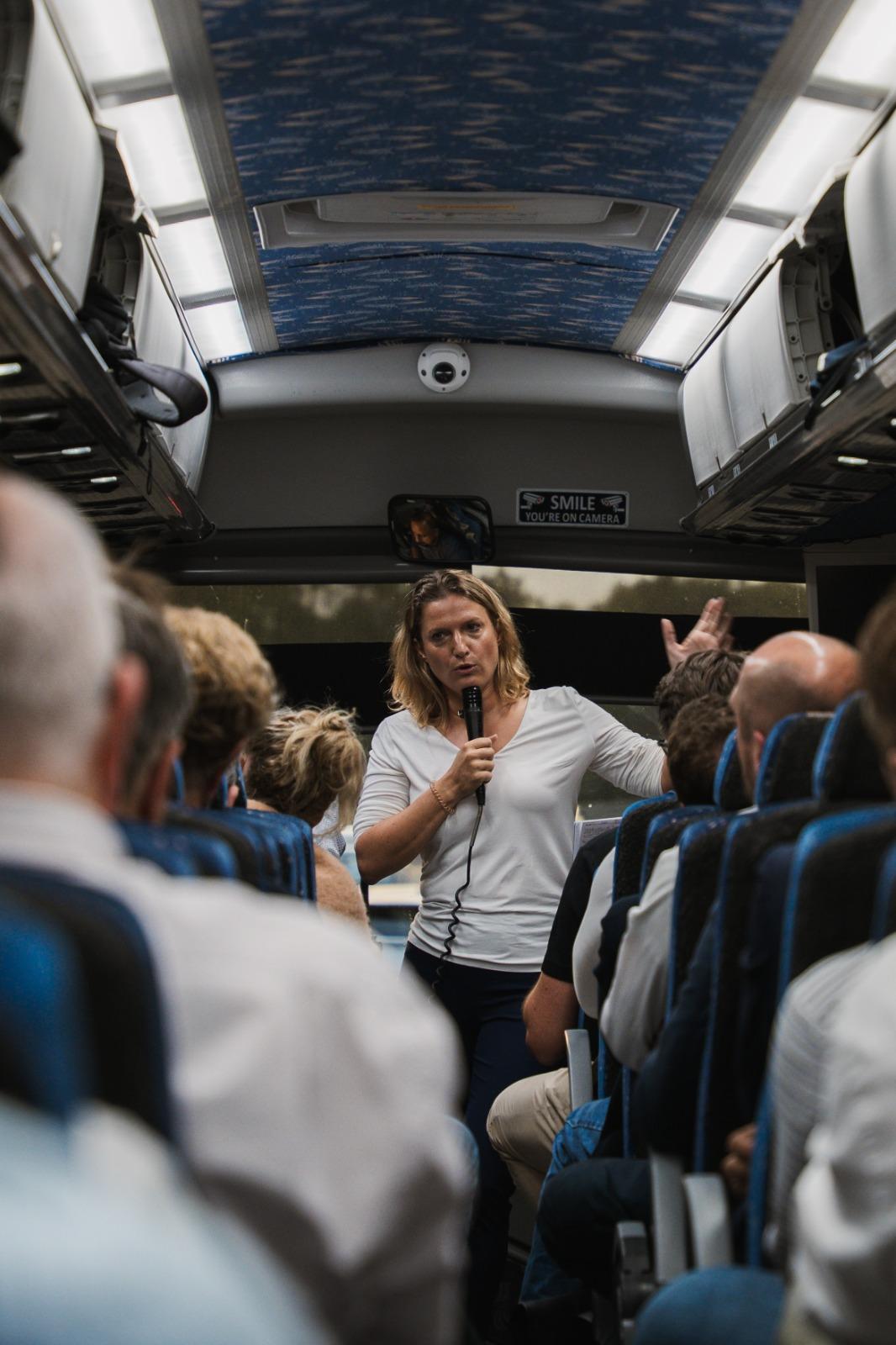
Ann-Jo Jacobs
CEO & Founder · AI Nation
Ann-Jo Jacobs is an entrepreneur, keynote speaker and founder of AI Nation, where she helps organisations build AI into their daily work in a practical way. She is known for her clear, no-nonsense approach: no hype, but concrete applications that really work.